Every dip is a 1-of-1 — a pattern no one can copy, not even you. This guide shares the exact process I use in my studio to marble vegetable-tanned leather: the preparation and the sealing that make the pattern part of the leather, with a finish that doesn't crack or peel.
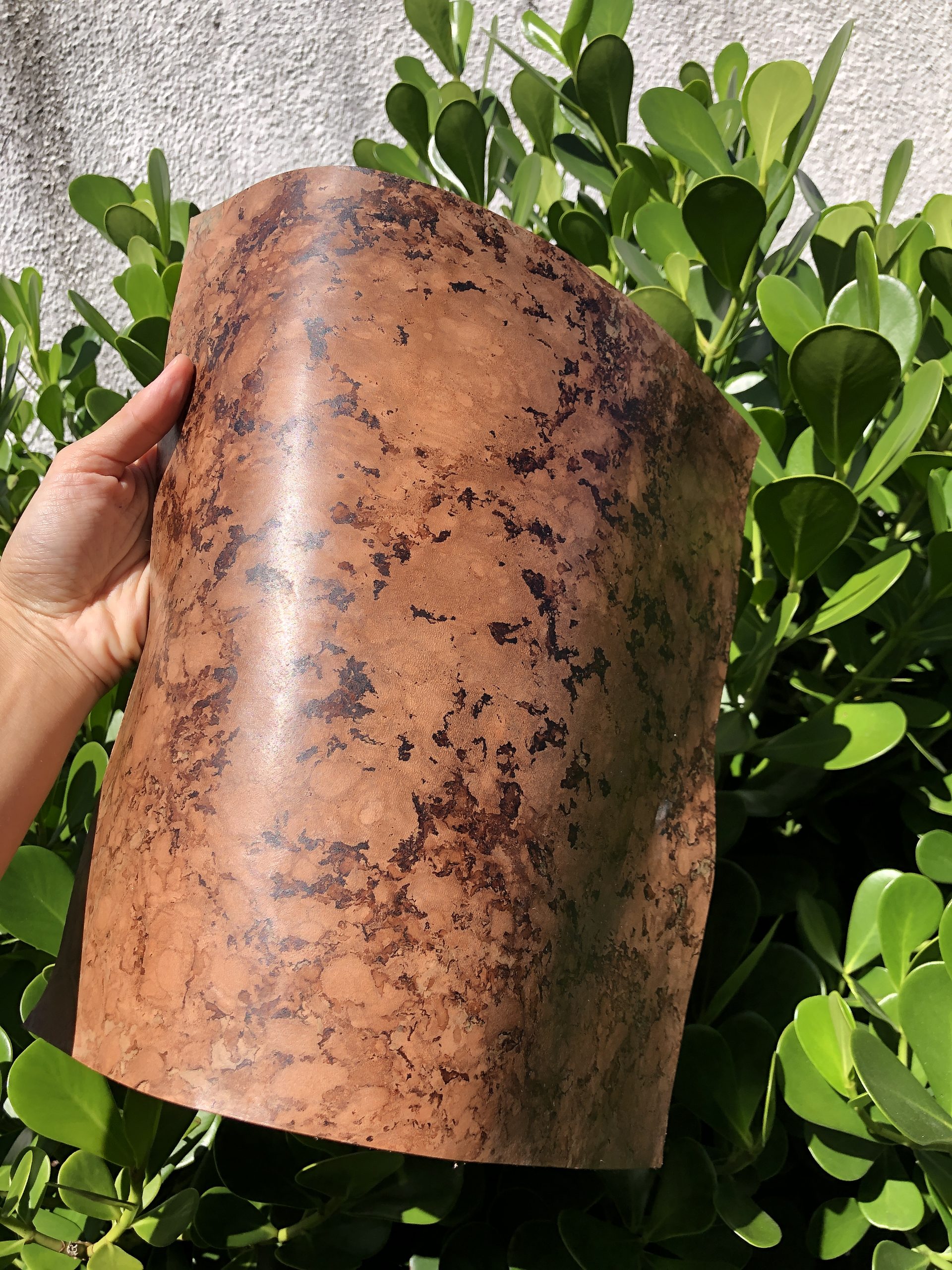
Hand-marbled veg-tan leather from the Feitio Arte studio
Before you buy
What's inside
No fluff — the exact materials, recipes and steps I use, written so you can adapt them to what you can find where you live.
Paint floating on an aqueous surface, transferred to the leather in a single dip.
CMC (food-grade), alum as the mordant, water-based leather paint, brushes, pipettes, tray and the right water.
Applying the mordant so the pattern bonds instead of sitting on top — the key to a no-crack finish.
Consistency, dropping and opening the pattern on the gel.
Placing and lifting the leather to print the pattern cleanly.
Rinsing the excess, drying and sealing so the marbling lasts through daily use.
A look inside
Marbled veg-tan panels and pieces.
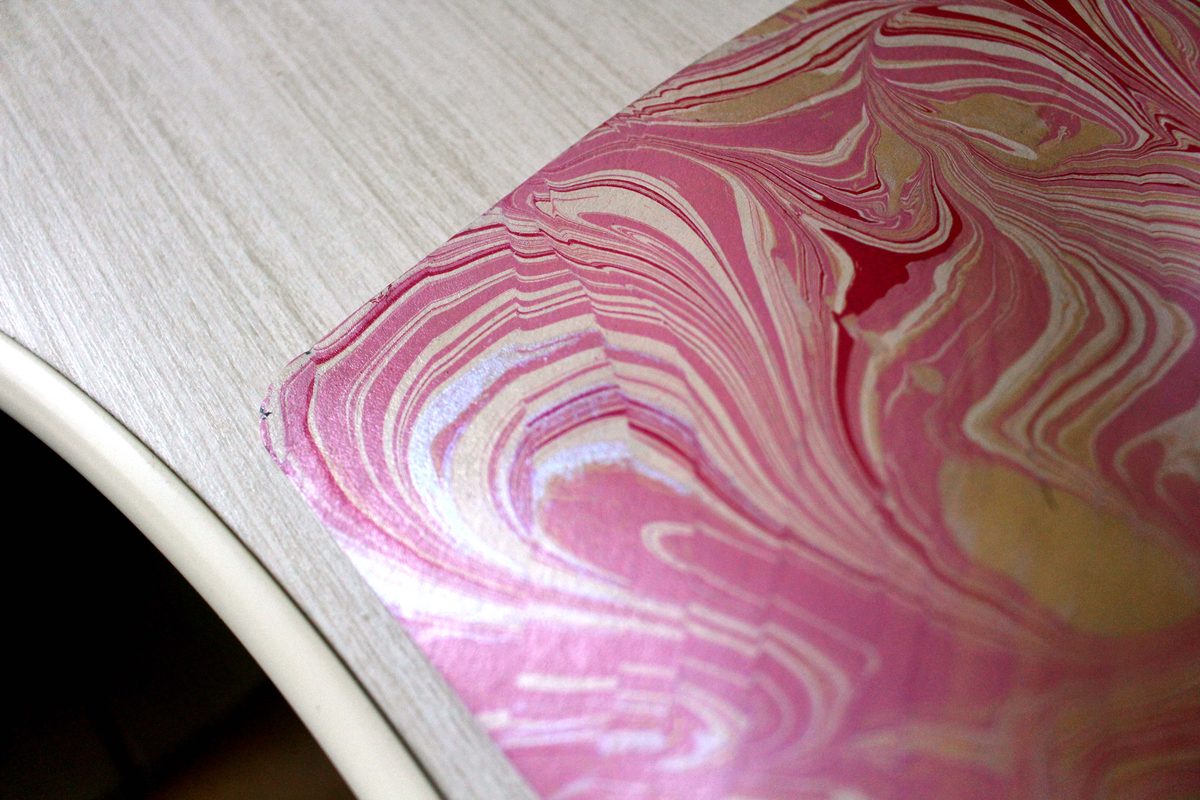
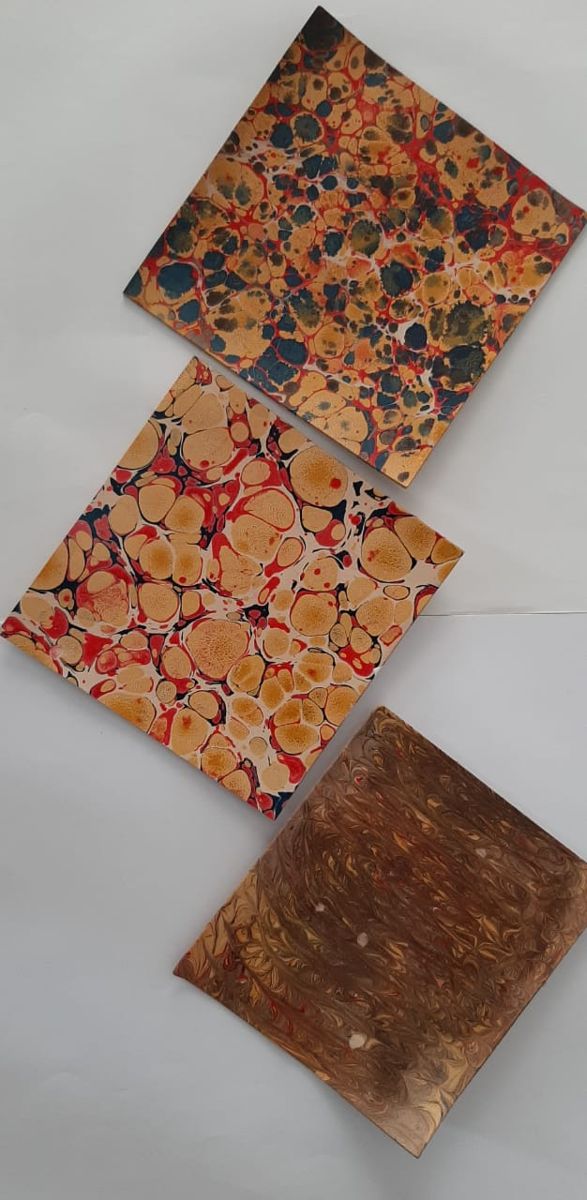
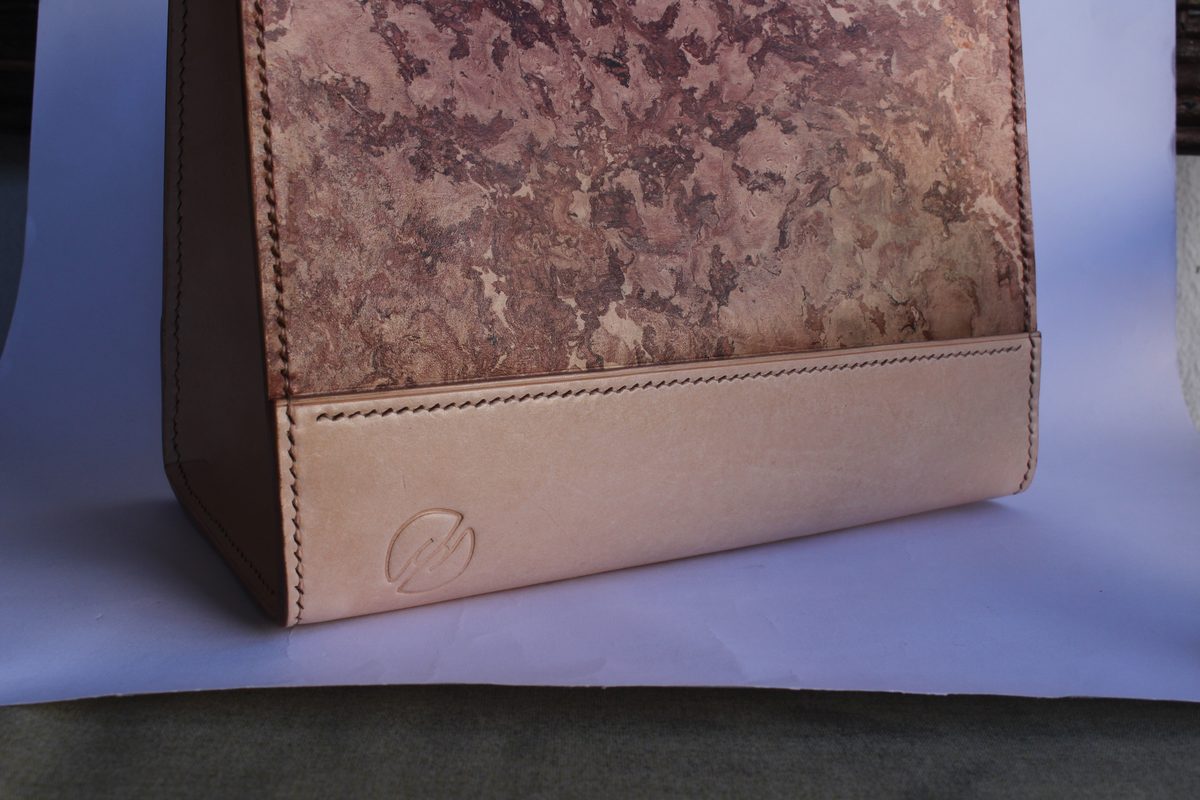
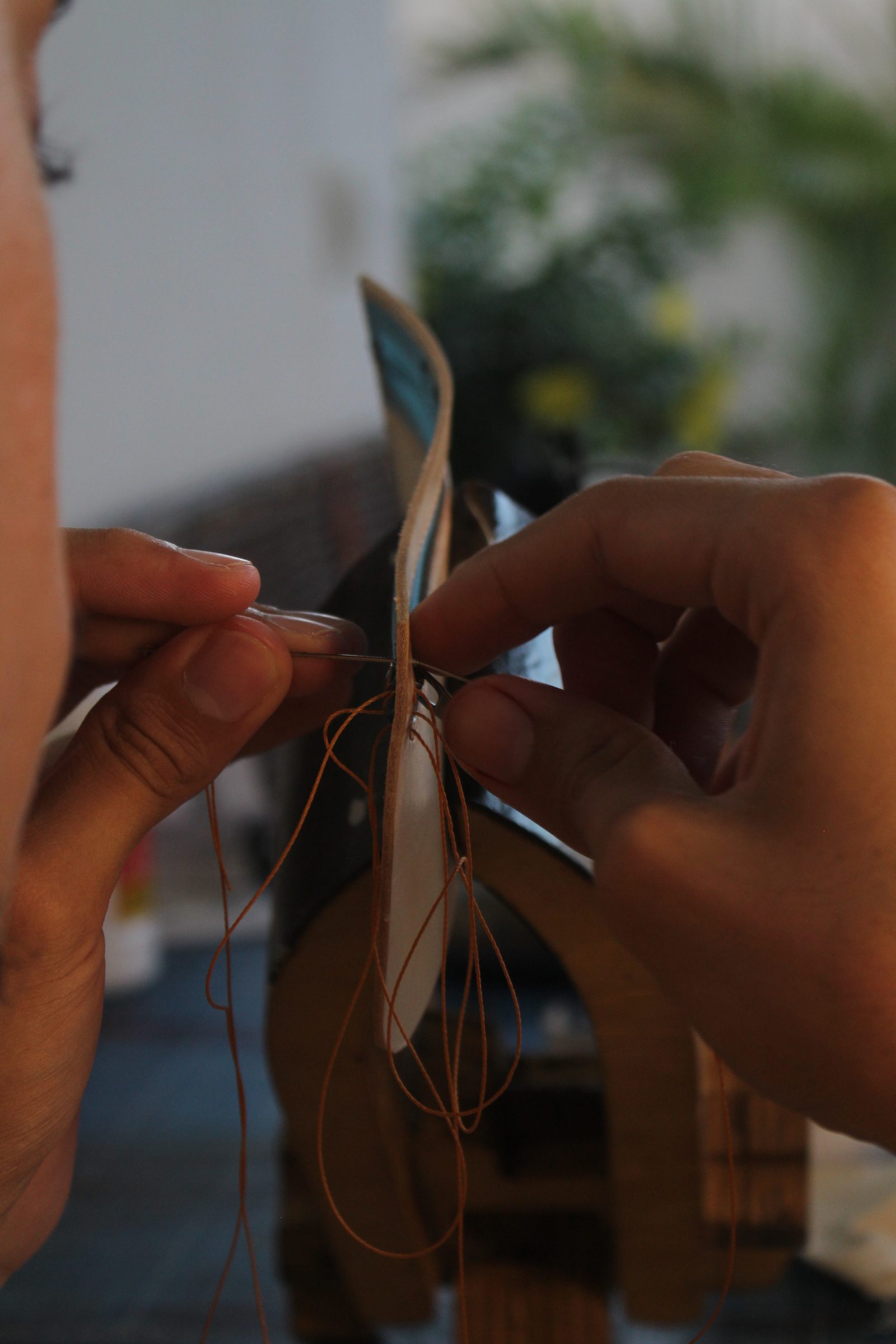
A clear, tested blueprint — the chemistry and the technique for a flawless finish — for less than the price of a single panel.
And with a 7-day guarantee, the risk is on us.
Designed specifically for vegetable-tanned leather using accessible, water-based materials — no rare imports. Questions before you buy? Reach out to us on Instagram.
FAQ
No. It's built for vegetable-tanned leather — its porosity is what takes the marbling. Synthetic and chrome-tan behave differently.
Not if the prep and sealing are done right. The guide focuses exactly on making the pattern part of the leather, for a finish that survives daily use.
No. It uses accessible, water-based materials — the guide explains what each one does so you can source local equivalents.
A PDF guide, in English, to read and keep on your bench.
You have a 7-day guarantee.
Learn to marble veg-tan leather from prep to seal, and turn a simple piece into wearable art.
Get the guide · US$ 40